
Why do most 100% cotton long-sleeved polo shirts lose their structural integrity and precise fit after fewer than ten wash cycles? You've likely experienced the frustration of unintentional garment shrinkage and the rapid loss of colour saturation that compromises a consistent professional aesthetic. Effective cotton polo shirt maintenance is a technical requirement based on fibre science and temperature management rather than a subjective lifestyle choice. This guide provides a comprehensive protocol for maintaining the structural integrity, colour density, and material quality of high-grade 100% cotton apparel.
We will examine the implementation of ISO 3758:2023 care standards, AATCC 2026 Volume 101 washing procedures, and specific storage techniques designed to eliminate collar and cuff deformation. Adhering to these documented textile care parameters facilitates an extended garment lifecycle and ensures the preservation of the material's original tactile characteristics. You'll gain access to a streamlined maintenance workflow that prioritises long-term utility over conventional, high-heat laundering habits. The systematic application of standardised textile preservation protocols ensures the mitigation of mechanical stress on long-sleeved variants while maintaining optimal fabric density and structural durability.
Key Takeaways
- Identify the relationship between cellulose fibre characteristics and fabric GSM parameters to optimise drying cycles and wrinkle resistance.
- Follow a technical cotton polo shirt maintenance protocol focused on 30°C temperature regulation for the preservation of colour density.
- Apply air-drying methodologies to mitigate mechanical stress and prevent unintentional thermal garment shrinkage.
- Maintain collar structural integrity and cuff elasticity through specific drying and positioning techniques for long-sleeved variants.
- Use methodical folding sequences and natural protection agents for the assurance of long-term professional aesthetic and fibre quality.
Technical Properties of 100% Cotton and Maintenance Implications
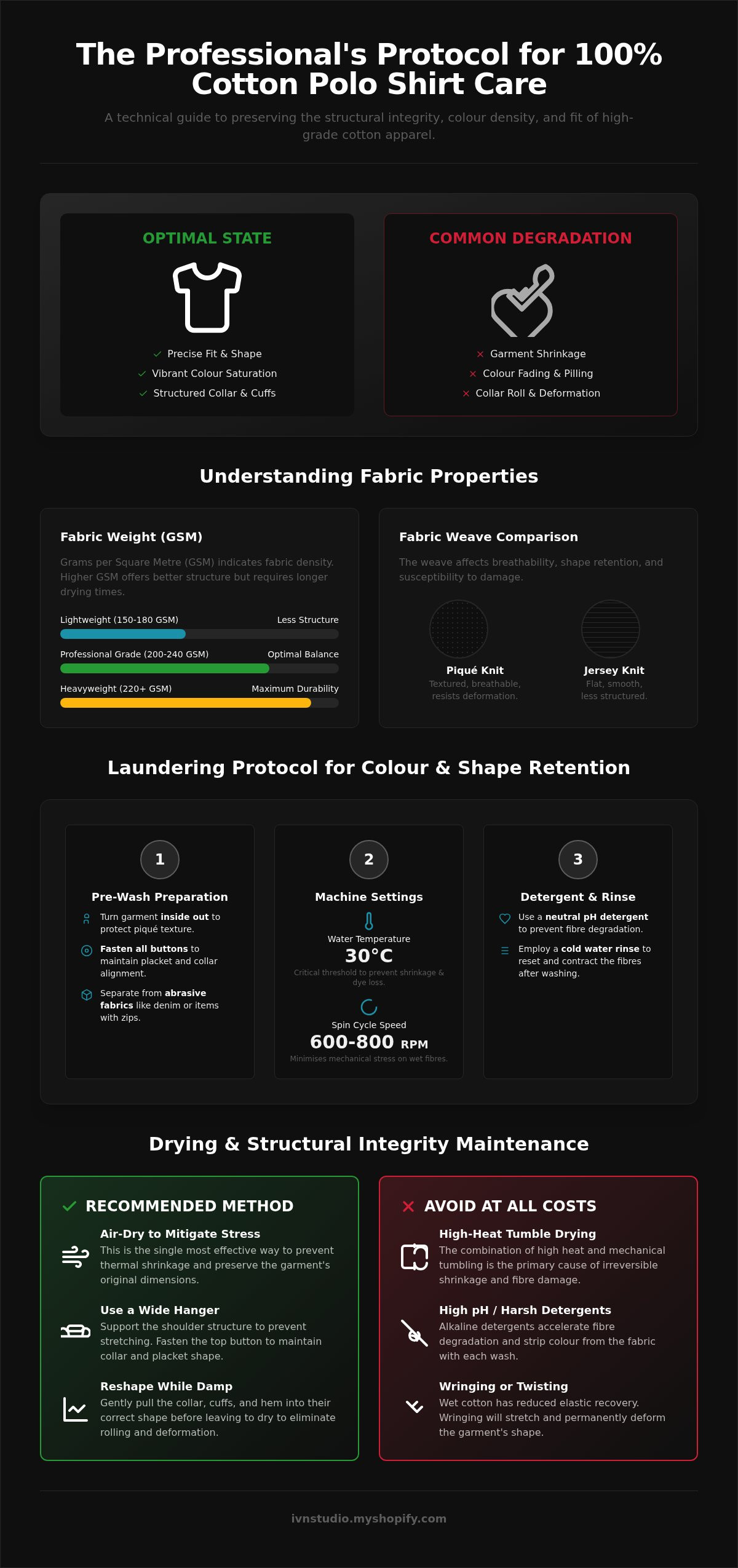
The material composition of 100% cotton involves a natural cellulose fibre structure characterised by high moisture absorbency and specific thermal reactivity. This high absorbency factor directly dictates the parameters of effective cotton polo shirt maintenance. Cotton fibres possess a natural tendency toward thermal shrinkage during initial laundering cycles because of the release of mechanical tensions applied during the spinning and weaving processes. Understanding these material properties is essential for the preservation of garment dimensions. Fabric weight, measured in grams per square metre (GSM), serves as the primary indicator for drying duration and wrinkle resistance. Higher GSM values indicate a denser piqué weave, which offers superior structural stability for the collar and placket but requires extended moisture evaporation periods.
Technical Polo shirt characteristics often centre on the distinction between piqué and jersey weaves. Piqué fabric features a geometric, textured surface that facilitates breathability and retains its shape better than the flatter jersey alternative. However, the open-hole structure of piqué cotton makes it more susceptible to snagging and requires specific laundering protocols to prevent the distortion of the textured knit. Professional-grade polos typically utilise a 200 to 240 GSM weight to ensure a consistent aesthetic whilst resisting the deformation common in lighter fabrics.
Cellulose Fibre Vulnerabilities
The exposure of cotton cellulose to high-temperature water combined with mechanical agitation triggers a relaxation of molecular chains, leading to irreversible dimensional changes. Alkaline detergents with high pH levels accelerate fibre degradation and cause the premature depletion of colour density. During the saturation phase, cotton fibres undergo significant swelling, increasing the garment's mass and making it highly vulnerable to deformation if handled incorrectly whilst wet. Maintaining a neutral pH environment and avoiding excessive mechanical force is mandatory for fibre longevity. It's also vital to recognise that wet cotton has reduced elastic recovery, meaning any stretching during the wash cycle can become permanent.
Fabric Weight and Durability Standards
Distinguishing between lightweight (150 to 180 GSM) and heavyweight (220+ GSM) cotton is a critical requirement for establishing care protocols. Heavyweight cotton provides the necessary mass to support the 'stand' of a structured polo collar, preventing the common 'collar roll' associated with lower-quality apparel. Thread count and the length of the cotton staple used in the yarn directly influence pilling resistance. Long-staple cotton fibres integrated into a high-density piqué knit result in fewer protruding ends, significantly reducing the occurrence of surface abrasion and pilling over multiple wear cycles. This structural density also improves the garment's ability to resist deep creasing, simplifying the post-wash maintenance workflow.
Laundering Protocols for Colour and Shape Retention
The execution of pre-wash protocols is the primary defence against surface abrasion and mechanical damage during cotton polo shirt maintenance. Turning the garment inside out protects the exterior piqué texture from direct contact with the washing machine drum, preserving the visual density of the fabric. Securing all buttons maintains the alignment of the placket and prevents the stretching of buttonholes during the agitation phase. Load organisation requires the strict separation of 100% cotton items from abrasive textiles like denim, canvas, or garments with exposed metal zips. This segregation eliminates the risk of micro-tearing and surface pilling caused by frictional heat. For optimal results, limit spin cycle parameters to 600-800 RPM. This reduction in centrifugal force minimises the mechanical stress applied to the cellulose fibres whilst the garment's in its most vulnerable, saturated state.
Temperature and Fibre Stability
30°C serves as the critical technical threshold for cotton polo shirt maintenance. At this temperature, the water provides sufficient energy for detergent activation without destabilising the molecular bonds of the cellulose fibres. Washing at 40°C or higher increases the kinetic energy within the yarn, leading to accelerated thermal shrinkage and the rapid leaching of reactive dyes. Cold water rinses are necessary to reset the fibre shape and contract the yarn after the warm wash phase. This thermal transition ensures the garment retains its original dimensions and prevents the 'spirality' effect where side seams twist after laundering. It's a fundamental step for maintaining a professional silhouette over multiple cycles.
Chemical Maintenance: Detergents and Additives
Detergent selection must prioritise non-biological, pH-neutral liquid formulations. Biological detergents contain protease and amylase enzymes designed to break down organic matter, which can inadvertently degrade the natural cellulose structure of long-sleeved cotton polo shirts over time. Optical brighteners and bleaches present in standard powders cause irreversible colour depletion and "frosting" on the surface of saturated fabrics. Avoid fabric softeners. These chemicals deposit a waxy, hydrophobic coating on the fibres, significantly reducing the natural breathability and moisture-wicking properties of the piqué knit. Technical maintenance requires the avoidance of 'all-in-one' pods, as they're often too aggressive with high-alkalinity levels unsuitable for high-grade natural fibres.
Drying and Heat Management Protocols
Technical drying analysis identifies mechanical tumble drying as the primary cause of structural degradation in 100% cotton. High-velocity air combined with elevated temperatures creates "micro-fractures" in the cellulose fibres, leading to surface fuzzing and a reduction in fabric density. Air-drying is the mandatory baseline for professional cotton polo shirt maintenance to prevent irreversible thermal contraction. This process ensures the material retains its original piqué texture and dimensional stability without the risk of "baking" the fibres into a brittle state.
Wet cotton fibres are highly malleable and prone to gravitational stretch. Hanging a long-sleeved polo shirt whilst it's saturated with water results in vertical distortion, specifically affecting the shoulder seams and sleeve length. Positioning the garment horizontally on a flat, ventilated drying rack is the only technical method to maintain the original garment specifications. This horizontal alignment prevents the weight of the moisture from pulling the knit out of shape, ensuring the professional aesthetic remains consistent over time.
Direct UV exposure initiates a photochemical reaction that depletes colour saturation and weakens the cellulose bonds. This "sun-bleaching" effect is often uneven, resulting in visible streaks on darker garments. Drying protocols should be conducted in shaded, well-ventilated environments with the garment remaining inside out. Managing moisture content is also vital for post-wash processing. Optimal results are achieved when the fabric retains approximately 10 percent moisture, as this state facilitates easier fibre realignment during the ironing phase.
The Risks of Mechanical Drying
Mechanical tumble drying facilitates the rapid degradation of the cellulose structure through a combination of thermal stress and kinetic friction. The physics of shrinkage involve the sudden loss of moisture, causing fibres to contract and pull the piqué knit closer together. This thermal shock makes the cotton brittle and significantly reduces the garment's lifecycle. Air-drying protocols eliminate these risks whilst providing a 100 percent reduction in drying-related energy overheads.
Ironing and Steaming Specifications
100% cotton requires high heat settings with consistent steam delivery to penetrate the dense piqué weave. Ironing the garment whilst damp facilitates the efficient removal of creases and reduces the mechanical pressure needed from the iron's soleplate. For darker colour variants, the use of a pressing cloth is a technical requirement to prevent the development of "iron shine" or surface scorching on the piqué texture. Maintain the iron in constant motion to prevent localised heat build-up on the long-sleeved sections.
Structural Integrity: Collar and Cuff Maintenance
The technical preservation of the structural integrity of the collar and cuffs requires specific mechanical intervention to mitigate the effects of piqué knit relaxation. Effective cotton polo shirt maintenance involves the precise management of high-stress zones to prevent the 'bacon collar' effect. This wavy edge deformation results from the uneven stretching of the rib-knit structure during the saturation and agitation phases. Targeted steam ironing from the centre of the collar towards the points realigns the cellulose fibres and restores the original edge tension. For those seeking durable workwear, acquiring high-specification long-sleeved cotton polo shirts provides the necessary material density to resist these common structural failures.
Maintaining the 'stand' of the polo collar is a function of crease memory established during the drying cycle. Drying the garment with the collar in the 'up' position ensures the fabric sets in a vertical orientation, supporting the professional silhouette during subsequent wear. Sleeve length consistency is managed through manual reshaping whilst the garment is in a saturated state. This protocol involves the gentle longitudinal extension of the sleeves to counteract the natural thermal contraction of 100% cotton fibres. Symmetry across the garment is verified by aligning the cuff edges before the commencement of the horizontal drying process.
Collar Rigidity Protocols
- Utilise the 'up' position drying method to establish permanent crease memory in the rib-knit structure.
- Apply light starch to the underside of the collar for enhanced rigidity in professional environments.
- Avoid the use of thin wire hangers to prevent 'shoulder nipples' and vertical garment distortion.
- Insert temporary collar stays during the drying phase to maintain precise point alignment.
Long-Sleeved Cuff Management
Cuff elasticity preservation is achieved through the avoidance of mechanical tension during the laundering and drying stages. Correct cotton polo shirt maintenance for long-sleeved variants necessitates the manual compression of the ribbed cuff whilst wet to ensure the elastic recovery of the knit. Storage techniques for long-sleeved items require folding rather than hanging to eliminate gravitational stress on the shoulder and sleeve seams. Methodical folding along the natural seams prevents the development of permanent deep creasing in the piqué fabric. This approach ensures the garment remains ready for immediate professional utility without the need for repetitive high-heat processing.
Organisation and Storage for Professional Utility
The final phase of cotton polo shirt maintenance focuses on the technical preservation of garment geometry during periods of non-use. Storage conditions directly impact the rate of cellulose fibre degradation and the retention of the piqué weave's structural memory. A controlled wardrobe environment requires the total exclusion of direct UV radiation to prevent the localised fading of reactive dyes. Maintaining relative humidity levels between 40 and 50 percent is necessary to inhibit the growth of biological contaminants whilst preventing the fibres from becoming excessively brittle. Cedar blocks and lavender sachets provide a functional, non-chemical barrier against textile pests and assist in moisture regulation within enclosed storage units.
Identifying the functional end-of-life for 100% cotton apparel is essential for maintaining a consistent professional aesthetic. Criteria for garment decommissioning include persistent surface pilling that resists mechanical removal, the permanent loss of elastic recovery in the cuffs, and visible thinning of the cellulose structure in high-friction zones. Once the piqué knit loses its ability to hold a pressed crease or the collar stand collapses despite technical starching, the item no longer meets the standards for professional utility. Systematic replacement ensures the wardrobe remains aligned with high-performance requirements.
Folding vs Hanging Analysis
Hanging 100% cotton knits is technically contraindicated because of the continuous gravitational stress placed on the shoulder and neckline seams. Unlike woven fabrics, the interlocking loops of a piqué knit facilitate vertical elongation, leading to irreversible deformation and the development of "hanger flares". A methodical folding protocol is the only reliable method for long-term cotton polo shirt maintenance. Follow this sequence for optimal results:
- Secure all buttons to ensure placket alignment.
- Position the garment face down on a flat, clean surface.
- Fold the long sleeves horizontally across the back, ensuring the cuffs don't overlap the side seams.
- Fold the lateral sections towards the centre to create a uniform rectangle.
- Execute a final horizontal fold from the hem to the shoulder line.
This configuration minimises deep creasing and allows for efficient stacking without compressing the lower garments in the sequence. Proper ventilation between folded items prevents the development of stagnant odours and maintains the fabric's tactile quality.
Seasonal Storage and Protection
Transitioning long-sleeved polos into seasonal storage requires a final technical inspection for residual organic matter or moisture. Vacuum sealing is efficient for space management but can lead to the "crushing" of the piqué texture and the setting of permanent creases if the compression is too high. Breathable garment bags manufactured from non-woven polypropylene offer a superior technical solution by allowing air circulation whilst providing a barrier against dust and light. Before re-integration into the active wardrobe, garments should undergo a low-temperature steam cycle to reactivate the cellulose fibres and restore the original fabric loft. This systematic approach ensures that high-quality cotton remains a viable professional asset across multiple years of service.
Optimising Professional Wardrobe Lifecycle and Utility
The consistent application of 30°C temperature thresholds, horizontal drying methodologies, and methodical folding protocols ensures the long-term preservation of 100% natural cotton fibres. Adhering to these standardised cotton polo shirt maintenance parameters facilitates the retention of colour density and structural geometry across the entire garment lifecycle. Professional utility depends on the mitigation of mechanical stress and the total avoidance of high-heat mechanical processing. These technical care standards provide a reliable framework for maintaining a consistent smart-casual aesthetic whilst protecting the material's tactile properties. Transitioning to high-specification apparel ensures a baseline of durability and superior material quality. Purchase high-specification 100% cotton long-sleeved polo shirts to secure professional-grade utility and a refined smart-casual aesthetic. The integration of durable long-sleeved construction with precise maintenance protocols guarantees an extended functional lifecycle for your professional wardrobe assets. Implement these technical standards to ensure your apparel maintains its original structural integrity and professional impact.
Frequently Asked Questions
How do I wash a 100% cotton polo shirt without it shrinking?
Wash the garment at a maximum temperature of 30°C using a non-biological detergent to prevent thermal shrinkage. High temperatures release mechanical tensions established in the cellulose fibres during production, leading to dimensional contraction. Avoiding the tumble dryer is equally critical, as the combination of heat and agitation causes irreversible fibre shortening. Follow these cotton polo shirt maintenance parameters to ensure the garment retains its original fit and structural geometry.
Is it better to hang or fold cotton polo shirts for long-term storage?
Folding is the only technical storage method that prevents vertical deformation in cotton knits. Hanging 100% cotton garments leads to "hanger flares" and permanent stretching of the shoulder seams because of gravitational pull on the wet or heavy fibres. Methodical folding along natural seams maintains the garment's professional silhouette and prevents deep creasing. Store folded items in a ventilated environment with relative humidity between 40 and 50 percent.
How can I fix a curled or 'bacon' collar on my polo shirt?
Fix a curled collar by applying targeted steam ironing from the centre of the collar towards the points. This mechanical intervention realigns the rib-knit structure and restores edge tension. For persistent deformation, use a light application of laundry starch on the underside before pressing. Establishing crease memory by drying the collar in the "up" position also prevents future curling and maintains the necessary rigidity for a professional presentation.
Can 100% cotton polo shirts be tumble dried safely?
No, tumble drying is not recommended for 100% cotton apparel due to the risk of thermal shock and micro-fractures. The rapid moisture loss and high-velocity air cause fibres to become brittle and contract, significantly reducing the garment's functional lifecycle. Air-drying on a horizontal surface is the mandatory protocol for effective cotton polo shirt maintenance. This method eliminates the mechanical friction and heat that facilitate surface pilling and structural degradation.
How often should I wash my cotton polo to ensure maximum longevity?
Launder the garment only when visible soiling or odour accumulation necessitates it. Frequent laundering cycles increase the cumulative mechanical stress on cellulose fibres and accelerate colour depletion. Spot cleaning for minor stains is a more efficient preservation strategy. Reducing wash frequency directly correlates with an extended garment lifecycle and the maintenance of the piqué knit's original tactile characteristics and structural density over multiple years of use.
What temperature should I iron my 100% cotton polo shirt at?
Iron 100% cotton at a high-heat setting, specifically the cotton mark on the iron's dial, with consistent steam delivery. Optimal results are achieved when the fabric retains approximately 10 percent moisture. Ironing whilst damp facilitates easier fibre realignment and reduces the physical pressure required from the iron's soleplate. For darker shades, use a pressing cloth to prevent the development of surface shine or heat-induced scorching on the piqué texture.
How do I prevent my navy or black cotton polo from fading?
Prevent colour fading by washing the garment inside out at a maximum temperature of 30°C. Use liquid detergents formulated for dark colours that lack optical brighteners or bleaches. Drying the garment in a shaded, well-ventilated area is mandatory to avoid sun-bleaching caused by UV radiation. These protocols protect the reactive dyes within the cellulose fibres and maintain the original colour saturation of navy and black variants for a professional aesthetic.
Should I use fabric softener on my 100% cotton polo shirts?
Avoid the use of fabric softeners as they deposit a hydrophobic, waxy coating on the cotton fibres. This chemical residue significantly reduces the natural breathability and moisture-wicking properties inherent in the piqué weave. High-grade cotton maintains its natural softness through correct laundering at 30°C and horizontal air-drying. Eliminating softeners ensures the garment remains functional for professional utility whilst preserving the material's original structural integrity and absorbent qualities.